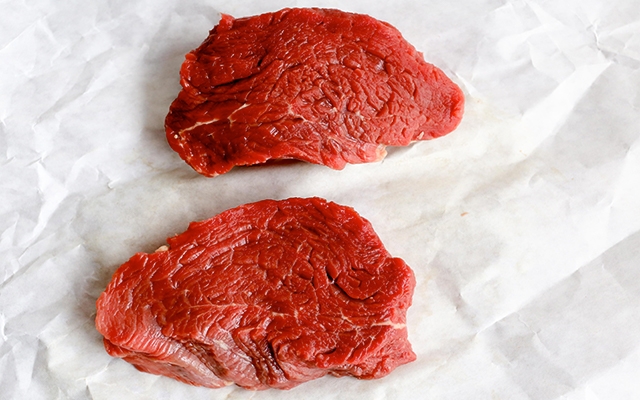
Fillet Steak
What is Fillet Steak?
Fillet steak – pronounced Fill-ette – is cut from a cow carcase's tenderloin muscle, located towards the back of the rib cage. Because this muscle does not bear any weight of the cow, it is not exercised and therefore, unlike almost all other steaks, it’s connective tissues are not toughened. Ultimately, this delivers the very softest, most tender cut of beef one can find! Despite being so tender, the fillet steak is almost always a very lean cut of meat with little intramuscular fat (marbling) — giving it a finer, more subtle taste than other steak cuts. This also means the fillet steak is paired nicely with every and any setting, side or sauce, and makes a great inclusion for our meat box delivery.
History of Fillet Steak
The word fillet is derived from the French term “filet” — which translates literally as “thick slice”. As this suggests, fillet steaks are traditionally cut into relatively thicker slices as their surface area is limited by the small diameter of the round tenderloin. Each cow carcase typically delivers approximately 2kg of fillet steak which, along with its unique tenderness and texture, makes it the most expensive steak!
Choosing the perfect Fillet Steak
Grass-fed vs Grain-fed Fillet Steak
Though this might not always be immediately available, it’s very important to ensure that the fillet steak you select has come from a cow that has been grass-fed. Grass-fed fillet steaks are healthier to eat (grass-fed beef has higher % of vital vitamins, minerals and omega 3 fatty acids) and are much, much richer in taste!
Fillet steaks from a grass-fed cow are hallmarked by their dark red colour, paired with an ‘orangey’ (rather than traditionally, pale white) fat colouration. This orangey colour stems from the vitamin A-filled natural grass the cow has eaten throughout its life. To learn more about the benefits of grass-fed beef, check out our definitive guide on grass-fed beef!
Ageing Fillet steak
Some say that dry-ageing fillet steaks deliver the best taste and tenderness while others swear by wet-ageing. We’re not going to dive into the intricate differences (there are many) here, but our strong recommendation is to find fillet steaks that have been both dry and wet-aged for a total of 21 days! Having experimented endlessly, we’ve found that this delivers the best-balanced taste and flavour! Click here to read more about what the experts say on dry and wet -ageing.
Buy 21-day Wet & Dry-aged Fillet Steak
Fillet steak nutritional facts
Eat This Much have an awesome overview of the nutritional facts of the standard beef fillet that we recommend strongly to get a good understanding of fillet steaks in this regard. Have a look at an excerpt below:
| Fillet Steak nutritional facts | |
| Serving size of 85g | |
| Calories | 120 |
| Per Serving | % Daily Value |
| TOTAL FAT | 3.5g |
| Saturated | 1.5g |
| Cholesterol | 60mg |
| Sodium 48mg | 2% |
| Sodium 48mg | 2% |
| Total Carbohydrates 0g | 0% |
| Protein | 22g |
| Vitamin A | 0% |
| Vitamin C | 0% |
| Calcium | 0% |
| Iron | 0% |
Storing Fillet Steak
If stored in a standard fridge, fillet steak will likely last between 3 - 5 days regardless of how it has been packaged. When frozen, fillet steak can last for 6 months when packaged normally in plastic. If frozen and vacuum packed, fillet steak will very comfortably last for up to (and even over) 1 year without losing any of its flavours. Why?... Have a read of our deep dive into the science behind vacuum packing beef to learn more!
Buy vacuum-packed Fillet Steak
How to cook Fillet Steak
There are many different methods on how to cook fillet steak including frying, grilling, sous vide, BBQ, boiling and slow cooking. We encourage you to read our specialist guide on how to get melt-in-the-mouth fillet steak results, every time! In the meantime, here’s a rough snippet:
- Place a frying pan or skillet over medium heat until very hot — no need to add oil to the pan!
- Place Fillet Steak onto the pan
- Then take the seared fillet steaks and place them on a baking tray and put in the oven for between 5 and 6 minutes
- Finally, let the fillet steak rest for 10 minutes and then serve!
What to serve with Fillet Steak
Our strong recommendation is to serve your Fillet steak with Mashed Potatoes and Grilled Broccoli!